

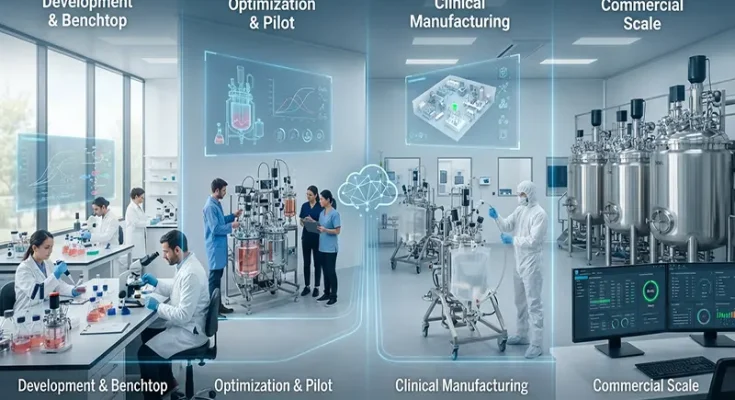
How to Scale Biomanufacturing Processes for Cell and Gene Therapy
For years, the cell and gene therapy (CGT) sector was defined by bespoke, small-batch, manual benchtop production. These labor-intensive methods were necessary to prove clinical efficacy in early-stage trials, but they are entirely unsustainable for commercial delivery.
Today, the industry faces a pressing modern mandate: industrialize and scale. As these advanced genetic medicines transition from experimental breakthroughs to standard-of-care treatments, the primary industry bottleneck has shifted from scientific discovery to reproducible, cost-effective manufacturing. Successfully scaling CGT biomanufacturing requires transitioning from open manual operations to standardized, automated, closed-system processing and robust vector optimization to ensure long-term commercial viability.
Overcoming Bottlenecks in Viral Vector Production
Viral vectors—such as adeno-associated viruses (AAV) and lentiviruses—are the critical delivery vehicles for genetic therapies, yet their production remains notoriously difficult to scale:
- Scaling Plasmid and Viral Vector Yields: Traditional transient transfection protocols struggle with batch-to-batch variability and high reagent costs. The industry is rapidly shifting toward