
Top Low Power IoT Tracker Objects for Global Asset Supply Chain Monitoring

Top Low Power IoT Tracker Objects for Global Asset Supply Chain Monitoring

For decades, international supply chains operated with a frustrating blind spot. Once a shipping container left the loading dock, it effectively vanished from visibility until it reached its destination port, leaving logistics managers guessing through customs delays, maritime storms, and transit bottlenecks. Today, that era of uncertainty is fading.

The maturation of Low-Power Wide-Area Network (LPWAN) technologies, ultra-efficient microcontrollers, and advanced battery chemistry has revolutionized logistics. Bulky, power-hungry GPS units have been replaced by smart, multi-year tracker objects. Deploying optimized low-power IoT trackers allows enterprises to achieve granular, real-time visibility across global supply chains without exorbitant cellular data or maintenance overheads.

The Connectivity Backbone: LPWAN Protocols in Logistics

Choosing the right hardware is meaningless without understanding the underlying connectivity network. Global supply chains rely on a diverse mix of LPWAN protocols tailored to different transit environments:

  • NB-IoT and LTE-M (Low-Power Cellular): These cellular IoT standards provide global roaming stability, deep

… Top Low Power IoT Tracker Objects for Global Asset Supply Chain Monitoring Read More
CRISPR Gene Editing Protocols for Rare Genetic Disorders

CRISPR Gene Editing Protocols for Rare Genetic Disorders

For decades, the diagnosis of a rare genetic disorder carried a heartbreaking prognosis: lifelong symptom management, progressive physical decline, and limited therapeutic options. Today, we stand in a radically different era of precision genetic medicine.

While individual rare diseases affect small patient populations, collectively they represent a massive global health burden—making them prime candidates for monogenic gene-editing interventions. Translating CRISPR from benchtop theory to clinical reality requires highly optimized, tissue-specific gene-editing protocols that maximize precision while minimizing off-target toxicity.

Molecular Mechanisms and Target Selection

Traditional CRISPR-Cas9 systems revolutionized biotechnology by utilizing double-strand breaks (DSBs) to disrupt or knock out faulty genes. However, treating rare genetic disorders often requires correcting specific point mutations rather than simply breaking a gene.

  • Cas Variants and Base Editing: Modern clinical protocols frequently move beyond standard Cas9 to precision base editors (adenine and cytosine base editors) and prime editing. These advanced tools allow molecular biologists
… CRISPR Gene Editing Protocols for Rare Genetic Disorders Read More
Key Benefits of Adopting Artificial Intelligence in Business Operations

Key Benefits of Adopting Artificial Intelligence in Business Operations

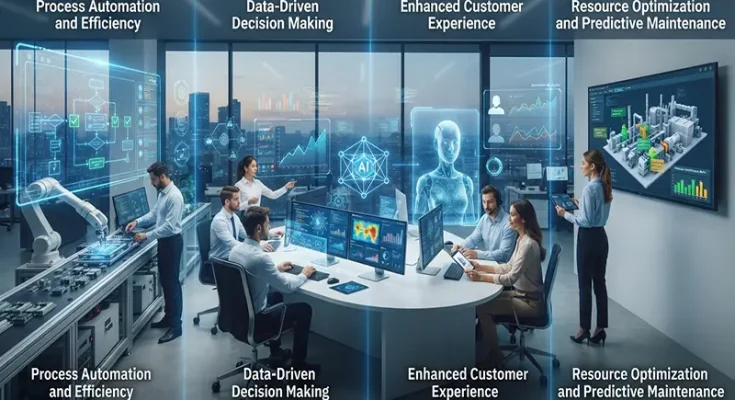
For decades, traditional enterprises were weighed down by manual data silos, sluggish administrative processing, and relentless operational drag. Employees spent precious hours on repetitive paperwork, while leaders made critical decisions based on lagging historical reports. Today, that rigid operational model is rapidly giving way to agile, intelligent organizations powered by AI automation.

Artificial intelligence has matured from an experimental tech novelty into core enterprise infrastructure across nearly every industry. By strategically embedding AI into daily operations, businesses unlock unprecedented efficiency, elevate data-driven decision-making, and secure sustainable competitive advantages in fast-moving markets.

Core Operational Pillars: Where AI Delivers Maximum Value

Implementing artificial intelligence successfully requires identifying where it creates the greatest operational leverage. Rather than treating AI as a scattered collection of tools, modern enterprises integrate it across four foundational pillars:

  • Process Automation and Efficiency: Intelligent automation streamlines routine administrative tasks, manual data entry, invoice processing, and document routing. By taking
… Key Benefits of Adopting Artificial Intelligence in Business Operations Read More
How Industrial IoT Sensors Improve Real-Time Predictive Maintenance in Manufacturing

How Industrial IoT Sensors Improve Real-Time Predictive Maintenance in Manufacturing

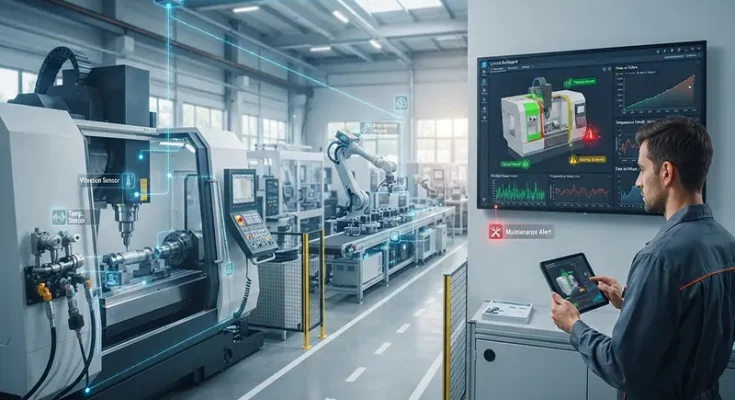
For decades, factory floors operated under a precarious model: the costly, reactive era of “run-to-failure” or rigid calendar-based maintenance. Equipment was serviced only after it broke down—halting entire production lines—or torn apart on strict schedules regardless of whether parts actually needed replacement. Today, that wasteful paradigm is fading away, replaced by continuous smart monitoring that turns the factory floor into a transparent, communicative ecosystem.

Driven by the explosive growth of Industrial IoT (IIoT) hardware, edge computing, and high-frequency sensors, modern heavy machinery constantly broadcasts its internal health. By capturing real-time physical telemetry and applying machine learning anomaly detection, IIoT sensors allow manufacturers to shift from guessing when machines will break to predicting failures well before they happen.

The Sensor Arsenal: What IIoT Devices Monitor

Modern manufacturing assets endure immense mechanical stress, thermal cycling, and electrical loads. To catch degradation in its infancy, engineers deploy a diverse arsenal of specialized IIoT …

How Industrial IoT Sensors Improve Real-Time Predictive Maintenance in Manufacturing Read More
Applications of Artificial Intelligence in Agricultural Biotechnology Startups

Applications of Artificial Intelligence in Agricultural Biotechnology Startups

For generations, agricultural R&D operated at the mercy of slow biological clocks. Developing a single climate-resilient crop trait or discovering a novel biopesticide traditionally required decades of trial-and-error crossbreeding, vast tracts of experimental farmland, and hundreds of millions of dollars in chemical screening. Today, that sluggish paradigm is being upended.

A new wave of agile agricultural biotechnology startups is merging computational biology with advanced machine learning. Driven by plunging gene-sequencing costs, massive biological datasets, and sophisticated neural architectures, these companies are compressing multi-year development timelines into mere weeks. By applying artificial intelligence to molecular biology, genomics, and phenomics, startups are fundamentally transforming how we engineer sustainable food systems.

AI-Accelerated Gene Editing and Precision Breeding

The cornerstone of modern ag-tech innovation lies in computational genomics. Rather than waiting for generations of crops to grow in the field, startups are simulating entire biological lifecycles digitally:

  • Genomic Prediction and Digital Twins: Machine learning
… Applications of Artificial Intelligence in Agricultural Biotechnology Startups Read More