
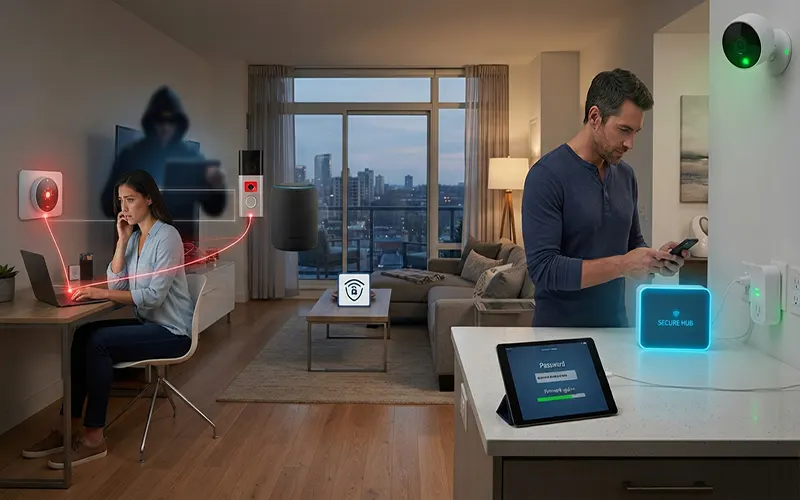
Imagine waking up to your favorite song playing softly, coffee brewing automatically, and the thermostat adjusting to your ideal temperature before your feet even touch the floor. The modern smart home promises unprecedented convenience, transforming sci-fi dreams into everyday reality. Yet, every connected gadget—from smart bulbs to Wi-Fi-enabled refrigerators—presents an invisible digital footprint.
As billions of connected devices flood the consumer market, our living spaces have become prime targets for automated botnets, malware, and privacy breaches. While convenience drives adoption, security has historically been an afterthought for both manufacturers and consumers—leaving homes vulnerable unless users understand the risks and take proactive steps to secure their networks.
The Hidden Attack Surface: Top Smart Home IoT Risks
Smart devices are fundamentally different from traditional computers. They often lack keyboards or screens, making them difficult to monitor, patch, or audit. Several core vulnerabilities define the modern IoT threat landscape:
- Default and Weak Credentials: Many budget-friendly IoT devices ship with hardcoded, universal factory passwords (like admin/admin or 12345). Automated threat actors scan the internet constantly looking for these devices to hijack them via credential stuffing.
- Insecure Network Traffic: A surprising volume of IoT data travels across local networks and up to the cloud in plaintext. Without end-to-end encryption, anyone on your Wi-Fi network can intercept sensitive telemetry, video streams, or user credentials.
- Unpatched Firmware and Vulnerable Routers: Unlike laptops or smartphones that receive regular monthly security patches, smart home devices are frequently abandoned by their manufacturers. They accumulate unpatched Common Vulnerabilities and Exposures (CVEs) that linger for years.
- Insecure APIs and Cloud Integrations: Your smart gadgets rarely talk directly to your phone without a middleman. Flaws in companion mobile apps or cloud-backend servers can expose user accounts, bypass authentication protocols, or allow unauthorized remote execution.
Real-World Implications: What Happens When a Smart Home is Hacked?
When a cybercriminal breaches a smart home, the consequences extend far beyond a technical glitch or a flickering light bulb. The physical and digital worlds intertwine, creating severe risks:
- Privacy Violations: Compromised indoor security cameras, baby monitors, or smart audio assistants can expose intimate moments, turning private domestic spaces into surveillance feeds for malicious actors.
- Network Pivoting (Lateral Movement): An insecure smart plug or connected toaster acts as an open door. Once inside, attackers use that low-security device as a stepping stone to pivot into primary laptops, personal network-attached storage (NAS) drives, and sensitive banking documents.
- Botnet Enlistment: Millions of compromised home appliances are routinely weaponized into massive distributed denial-of-service (DDoS) botnets—like the infamous Mirai botnet—capable of crippling major global websites and internet infrastructure.
Actionable Solutions: How to Lock Down Your Smart Home
Securing your smart home does not require an advanced degree in cybersecurity. By implementing a few foundational defense strategies, you can drastically reduce your attack surface:
- Network Segmentation (VLANs): The single most effective defense is isolation. Set up a guest network or a separate Virtual Local Area Network (VLAN) specifically for your IoT devices. Keep your computers, smartphones, and financial systems on a secure primary network. If an IoT device is compromised, it cannot reach your critical data.
- Eliminate Default Settings: Change all default usernames and passwords immediately upon unboxing. Enforce multi-factor authentication (MFA) on every companion app and cloud portal associated with your smart ecosystem.
- Establish a Routine Update Rhythm: Turn on automatic firmware updates for your home router, mesh system, and smart hubs. Regularly log into your router’s admin panel to check for connected devices and ensure your firmware is current.
- Vet Your Ecosystem: Buy hardware from reputable manufacturers with transparent security policies, clear product support lifecycles, and compatibility with modern secure standards like Matter and Thread.
The balance between smart automation and digital hygiene requires a shift in mindset. A smart home is not a static appliance; it is an evolving digital ecosystem connected to a global network.
Securing your living space is never a one-time setup—it is an ongoing habit of digital mindfulness. By treating every connected device with the same caution you would give a desktop computer, you can enjoy the magic of modern convenience without inviting unwanted guests into your digital home.